In today’s digital age, ancient Chinese metaphysical wisdom has also intriguingly merged with numbers. While traditional metaphysics doesn’t have a standalone “numerology” system, an interpretive framework for number energy has evolved based on the principles of Yin-Yang and the Five Elements, widely used in selecting license plates, phone numbers, floor, and room numbers.
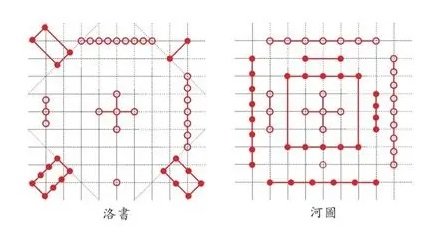
The Yin-Yang & Five Elements of Numbers
Each number is assigned a Yin-Yang attribute and an elemental correspondence:
Odd numbers (1, 3, 5, 7, 9) are Yang, representing active, pioneering energy.
Even numbers (2, 4, 6, 8, 0) are Yin, representing receptive, stabilizing energy.
Five Elements correspondence (a common system): 1 & 2 = Wood; 3 & 4 = Fire; 5 & 6 = Earth; 7 & 8 = Metal; 9 & 0 = Water.
Homophone Culture & Psychological Suggestion
In Chinese culture, the “homophone” of numbers plays a crucial role, reflecting deep cultural psychology:
8: Sounds like “fa” (prosper), the ultimate symbol of wealth and prosperity.
6: Represents “smoothness,” symbolizing that everything goes well.
9: Sounds like “jiu” (long-lasting), symbolizing longevity and eternity.
4: Sounds like “si” (death), often considered inauspicious and avoided (though in the Five Elements it belongs to Fire and has its positive aspects).
A Rational Perspective?
Choosing numbers is essentially a form of “energy psychology” or “symbolic economics.” Selecting a number full of 8s and 6s is more about giving oneself a positive psychological suggestion and projecting an auspicious, trustworthy signal in the commercial world. It reflects the human desire to place hopes for good fortune and actively shape one’s life through controlling minor symbols (like a number). This is a very modern and practical form of cultural adaptation.